How to Build an AI Voice Agent for 24/7 Lead Qualification
The architecture, call script, and metrics behind an AI phone agent that answers every call, qualifies the lead, and books the meeting automatically.
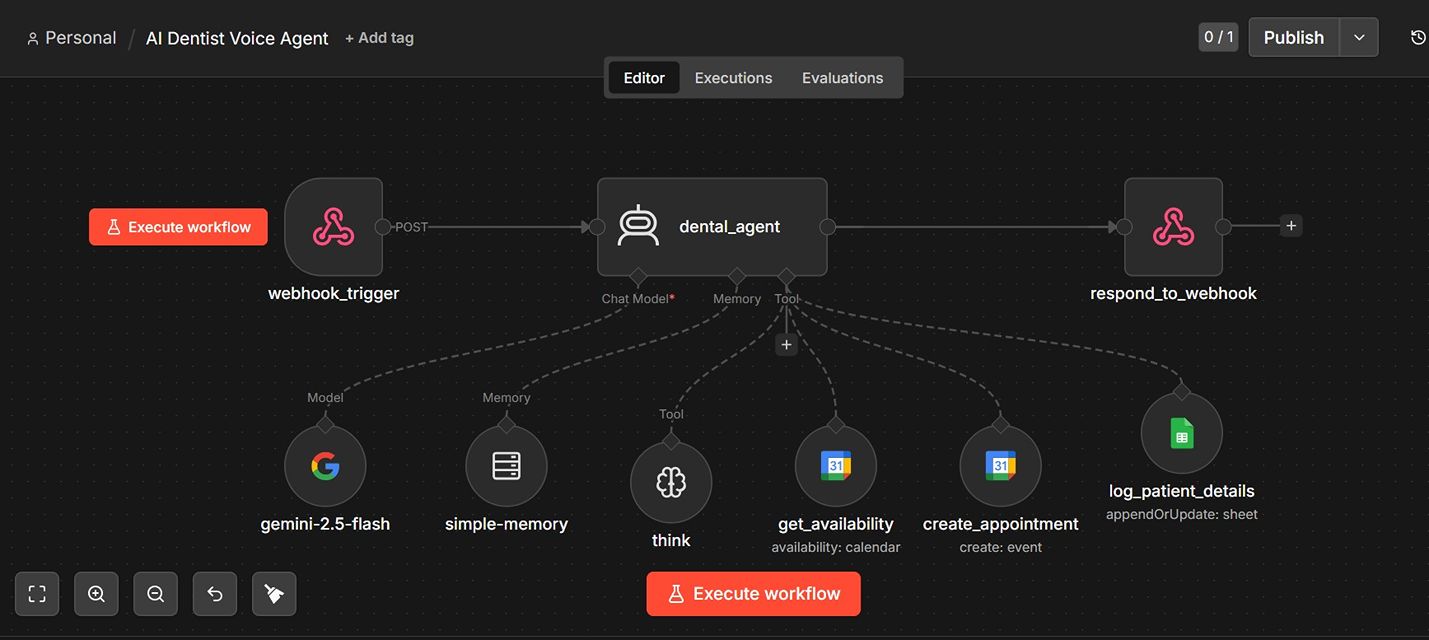
Most service businesses lose revenue in the gap between the phone ringing and someone picking it up. Calls arrive after hours, in the middle of a job, or while the one person who knows the pricing is on another line. The caller does not leave a voicemail. They call the next company on the list.
An AI voice agent closes that gap. It answers on the first ring at any hour, asks the same qualification questions your best rep asks, books the meeting, and writes everything to your CRM. This guide covers how one is actually built, what to script, and how to tell whether it is working.
Architecture
The six layers of a working voice agent
Latency is the product. Every layer is chosen to keep the reply under a second.
1. Telephony layer
A programmable number that streams call audio in both directions with low latency. This is where call recording, transfer, and voicemail fallback live.
2. Speech to text
Streaming transcription so the agent can start reasoning before the caller finishes speaking. Tune it with a vocabulary list of your product names, plans, and locations.
3. The reasoning layer
A language model with a tight system prompt: who it is, what it may promise, the qualification questions, and when to escalate. Give it your FAQs and pricing rules as grounded context, not as guesswork.
4. Tools and integrations
Calendar availability, CRM create and update, SMS follow-up, and warm transfer. Without tools the agent is a talking FAQ; with them it closes the loop.
5. Text to speech
A natural voice with a consistent persona, streamed back sentence by sentence so the caller hears a reply within a second.
6. Logging and review
Every call transcribed, scored, and stored. This is the layer most teams skip, and it is the one that makes the agent improve week over week.
The script
A five-step qualification call that callers finish
The script is the product design. Everything else is plumbing.
- 1
Open with disclosure and intent
Greet, state that it is an AI assistant, and ask one open question: what are you calling about today? Intent captured in the first ten seconds sets the whole branch.
- 2
Ask the qualifying questions in order
Company or project type, timeline, budget range, decision role, and current tooling. Five questions maximum. Each one must change what happens next, or drop it.
- 3
Score against explicit rules
Turn answers into a score your team already agrees on. Hot means transfer now. Warm means book a slot. Cold means send resources and add to nurture.
- 4
Take the action on the call
Offer two concrete times and book the meeting while the caller is still on the line. Confirmation goes out by SMS and email before they hang up.
- 5
Escalate cleanly when unsure
Any pricing exception, complaint, or repeated misunderstanding triggers a transfer with a summary passed to the human, so the caller never repeats themselves.
Data model
What every call must capture
If a field is not written to the CRM, the call did not happen.
- Intent: what the caller actually wants, in their own words.
- Fit: industry, company size, or project type against your ideal profile.
- Timeline: buying now, this quarter, or researching.
- Budget signal: a range, not an exact figure.
- Authority: are they the decision maker or an influencer.
- Next action taken: booked, transferred, nurtured, or disqualified.
Metrics that tell you it is working
Answer rate
Percentage of inbound calls answered within three rings. This is the number that usually jumps from around 60 percent to nearly 100 overnight.
Qualification completion
Share of calls where all required fields were captured. Below 80 percent means the script is too long or the questions are ambiguous.
Booking rate
Meetings booked per qualified call. Compare it against your human baseline, not against a theoretical target.
Escalation rate
Calls handed to a person. Expect 20 to 30 percent early, trending down as you close content gaps.
Containment quality
Sample ten calls a week and grade them. Automation without review drifts quietly.
Pitfalls
Five mistakes that sink voice agent projects
- Writing a twenty-question script that no caller will sit through.
- Letting the agent invent pricing because the prompt never bounded it.
- Skipping the warm transfer path, so every edge case becomes a lost lead.
- Deploying without a recorded test set, then debugging on real customers.
- Measuring call volume instead of booked, qualified meetings.
FAQ
Common questions
Want an AI voice agent answering your calls?
Book a free automation audit. We map your call flow, write the qualification script with your team, and tell you exactly what a 24/7 agent would recover in missed leads.
Keep reading
AI Agents
AI Agents for Business: What They Do and Where to Start
11 min read
AI Readiness
CRM and Knowledge-Base Cleanup Before AI Deployment: A Practical Guide
10 min read
Client Onboarding
Client Onboarding Automation: A Practical Guide
10 min read